
Progressive overload training is at the heart of muscle building, strength gains, and the key ingredient to breaking plateaus. If you’re looking to take your workouts up a notch, understanding progressive overload is a real game changer. Grasping this knowledge & applying them will help build muscle, increase power & mastering strength gains.
What is Progressive Overload?
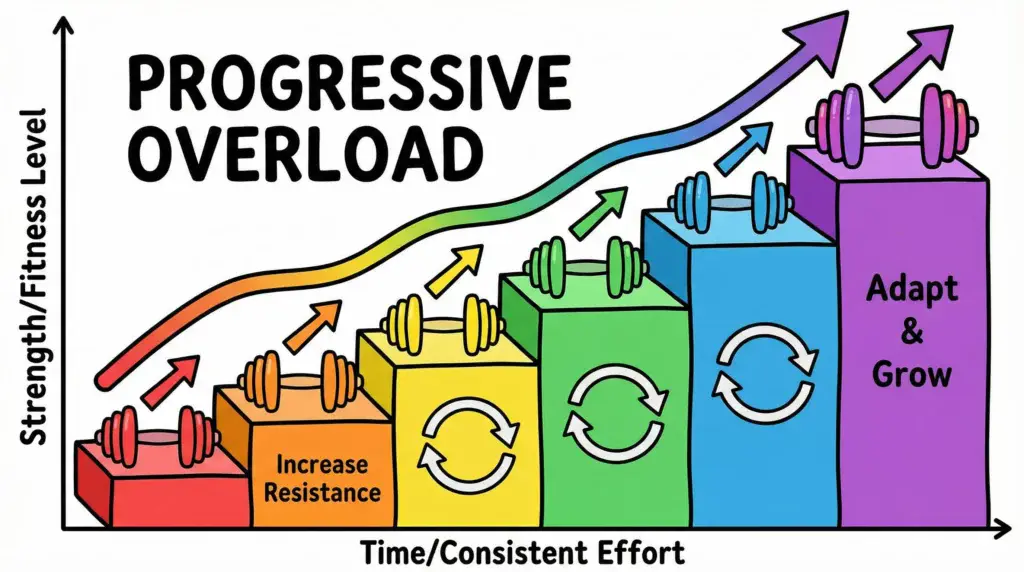
Progressive overload is all about gradually increasing the challenge you put on your muscles over time. This could mean lifting heavier weights, squeezing out a few extra reps, shortening your rest periods, or simply upping your intensity. The idea is simple: if you make your workouts just a little tougher every time, your body adapts and gets stronger, fitter, or more muscular as a result.
You can use progressive overload with almost any type of exercise, regardless of your training environment. This applies whether you’re into lifting, running, or grinding through home bodyweight circuits. Think of it as the steady push that turns consistent effort into real improvement, instead of hitting a plateau and getting stuck there for weeks.
Why is Progressive Overload Important for Progress?
If you use the same weight, do the same number of reps, or run the same route at the same pace every time, your body adapts and progress stalls. Your muscles, bones, and cardiovascular system all figure out how to handle what’s being asked of them. With nothing new to challenge them, your growth slows way down.
Consistent progress happens from those small increases in demands. For example: another rep, a kilo more on the bar, or working in a new set. Progressive overload plays a key role here. It helps prevent plateaus and keeps your results moving. Research backs this up. Studies show even small increases in training volume lead to greater muscle and strength gains than simply repeating the same routine.
For beginners especially, progressive overload is one of the best ways to keep progress and motivation high. There’s a big confidence boost that comes from visible progress & results.
How to Apply Progressive Overload in Your Training
Putting progressive overload to work doesn’t mean you have to switch up your entire routine every month. Here are some practical, straightforward ways to make it work:
- Increase Weight: One of the classic ways to pump up the challenge. Once you can complete all your sets and reps with solid form, add a small weight increase next time.
- Add More Reps: If adding weight isn’t doable yet, tack on one or two more reps per set instead. Over time, these tiny changes lead to real gains.
- Add Sets: Another way is to add a set. Instead of three sets, move to four with the same weight and reps and notice the difference.
- Reduce Rest Time: Cutting your rest a bit makes the exercise way tougher and amps up endurance, without lifting more.
- Change the Tempo: Slowing down a movement—for instance, taking longer on the lowering phase of a squat—keeps your muscles under tension longer and gives intensity a boost.
Tracking your progress matters a lot here. Use a workout log, an app, or simply jot notes in your phone to remember where you finished last time. This helps you keep pushing forward, even if it’s just a little bit more with each session.
Programming Examples That Use Progressive Overload
Mapping out your routine with progressive overload doesn’t have to get complicated. These approaches are proven to show results:
- Volume Increases: This means raising the total work, usually by upping reps or sets. For example, you could go from 3 sets of 8 reps to 4 sets of 8, or maybe 3 sets of 10.
- Strength Progressions: Programs such as 5×5 or Starting Strength focus on adding weight each week. Beginners benefit here: fast gains at first, then smaller jumps as you get stronger.
- Mixed Block Periodization: You can break training into “blocks”. One block might be for strength (heavy weights, low reps), followed by a block focused on hypertrophy (moderate weight, higher reps). I’d recommend alternating these—one month strength, next month hypertrophy. This strategy helps keep workouts fresh and makes it easier to adjust your focus while still progressing.
- Tempo Changes: Playing with speed on reps—Slow on the lowering of the bar can keep muscles under tension. You may play with different tempo counting.
No matter which approach you pick, the secret is to up the challenge just a little bit week after week. You want to be just outside your comfort zone, but not so far out that you risk getting hurt or burning out.
Progressive Overload at Home: No Equipment Required
You don’t need a gym packed with barbells and fancy machines to use progressive overload. Home workouts using bodyweight can absolutely tap into the same principle if you get a little creative. Here’s how to put progressive overload to work right in your living room:
- Increase Repetitions: With pushups, squats, and lunges, each session, shoot for just one or two reps more per set.
- Progress Movements: Move up from easier exercise versions (knee pushups) to tougher ones (regular pushups, decline pushups, diamond pushups).
- Change the Leverage: Try wide grip or close grip pushups, single leg or feet-elevated squats—each makes basic moves more challenging.
- Reduce Rest Time: Chop 10-15 seconds off your breaks for a real bump in intensity, no extra gear needed.
- Slow Down the Eccentric: Go slow on the lowering part—a four-second squat or pushup down, then pop back up. The extra time under tension is a real difference maker.
Things to Watch Out For with Progressive Overload
Progressive overload is a powerful tool, but keep an eye on a few things as you start to dial things up:
- Recovery Time: It’s tempting to go hard nonstop, but rest and sleep matter a ton for your muscles to recover and grow stronger.
- Injury Prevention: Progress is excellent, but solid form always wins over piling on more weight. Record yourself or have a friend give feedback to keep things safe.
- Plateau Busting: Everyone hits a wall eventually. Mix up your normal variables—a new rep range, different rest periods, or fresh exercises—if you get stuck.
- Listening to Your Body: Notice any persistent aches or pains. Regular soreness is fine, but sharp pain is a warning from your body to pull things back a bit.
Frequently Asked Questions
Here are some of the most common questions about progressive overload and how it works with everyday training routines:
How often should I increase the difficulty of my workouts?
For most people, bumping things up a little each week—like adding a rep, a bit more weight, or increasing rest periods—gets the job done. If you feel run down, stick to the same level for a week before stepping it up.
Do I need special equipment to use progressive overload?
Nope! Any routine can be tweaked to get a little tougher—bodyweight is fine, dumbbells are nice, a heavy backpack or household item works too. Creativity is your friend here.
Bringing It All Together
Progressive overload gives you the tools to keep leveling up, no matter your starting point or end goal. It doesn’t matter if you’ve got a gym full of equipment or just a bit of space in your home—you can always find a way to make things a little more challenging.
If you stick with it, track your changes, and pay close attention to what your body is saying, progress will keep moving forward, and you’ll constantly be building a stronger, more capable version of yourself. And don’t forget to celebrate every win along the way, however small—those steps up all add together in the long run.




This article resonates with me because I am seeking to build strength, especially upper body strength. I have plateaued on certain machines in terms of weight. Transitioning to adding reps, decreasing rest time, or slowing reps will certainly enable me to continue building. My next challenge is to increase bench press weight and reps.
Health is well, keep going.
Hi Godwin,
Thank you for your comment. I am glad this article resonates with you. We all can relate to hitting plateues here and there while in search of progress. Yes, just some simple adjustments in your regular routine can break some of these plateues. Progressive overload has been a popular talk in making this happen & a good workout program can definitely help you break through. Keep up the good work !