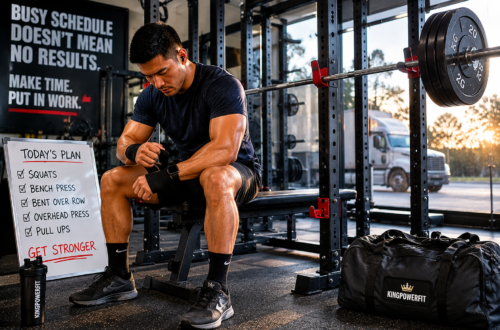
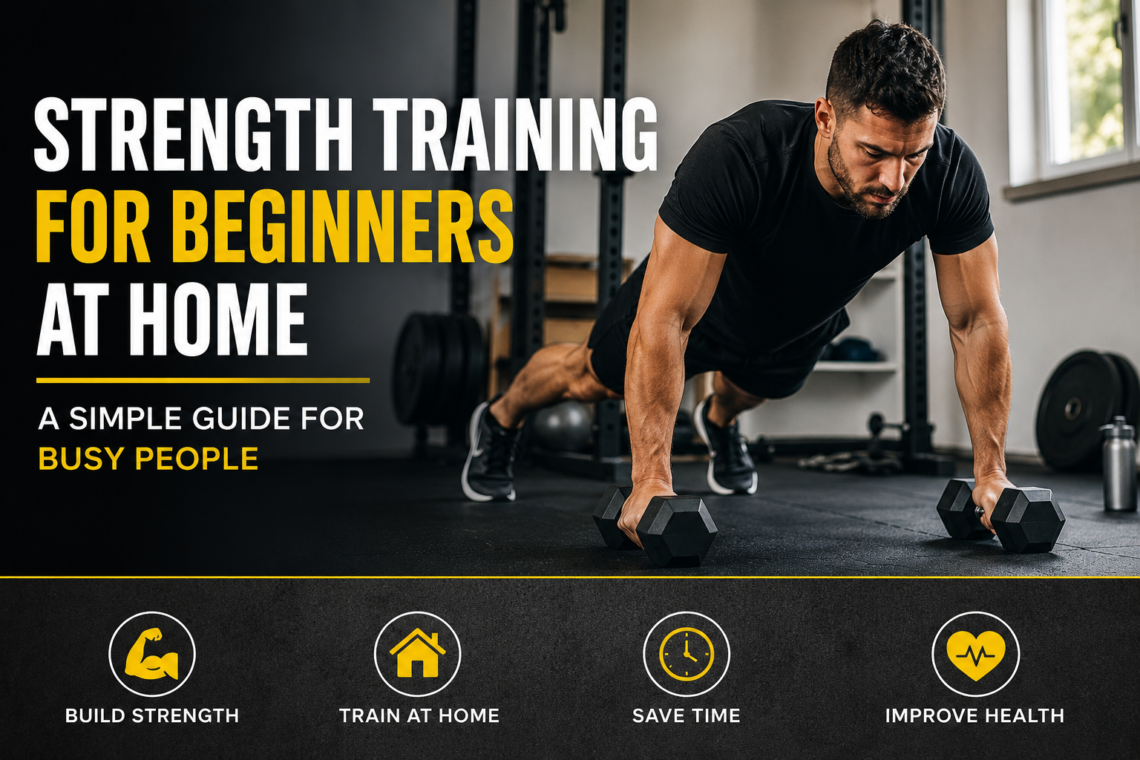
If you’re a truck driver, shift worker, or busy parent, strength training at home can be one of the easiest ways to stay consistent without spending hours travelling to a gym. With a simple DIY home gym setup and a small budget, you can start building strength from the comfort of your own home.
Strength training is one of the best investments you can make in your health, fitness, and long-term quality of life.
While many people associate strength training with building muscle, the benefits go far beyond appearance. A well-structured strength training program can boost metabolism, improve body composition, increase bone and muscle density, enhance mobility, and help you stay strong and independent as you move through life.
Getting started can feel intimidating, especially if you’re new to exercise. The good news is that strength training at home doesn’t need to be complicated. You don’t need a fancy home gym or expensive equipment to begin seeing results.
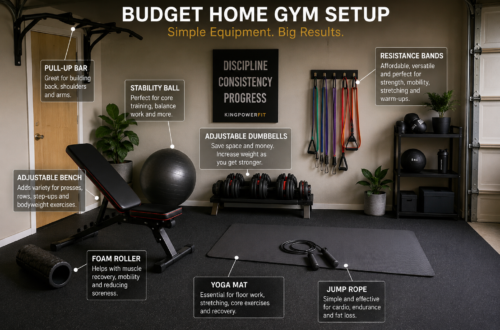
In fact, simple bodyweight exercises such as push-ups, squats, lunges, and planks are enough to build a solid foundation of strength. A Full Body Dumbbell Circuit guide will help you get started with some simple movements on the go or at home. As you gain confidence and experience, you can gradually introduce equipment such as resistance bands, dumbbells, barbells, squat racks, pull-up bars, and dip stations to continue progressing toward your goals.
Three Key Elements to Starting Your Strength Training Journey
As a beginner, there are three key elements that will help set you up for success when starting strength training at home.
1. Define Your Goals
To stay consistent and accountable, you first need to identify what you’re working towards. Whether your goal is building strength, improving posture, increasing mobility, losing body fat, or improving your physique, having a clear purpose will help you create a structured workout routine and stay focused on the bigger picture.
2. Set Yourself Up Mentally and Physically
Before you begin, it’s important to prepare yourself both mentally and physically for the journey ahead. There will be days when motivation is low, the couch looks comfortable, and distractions seem more appealing than training.
This is completely normal.
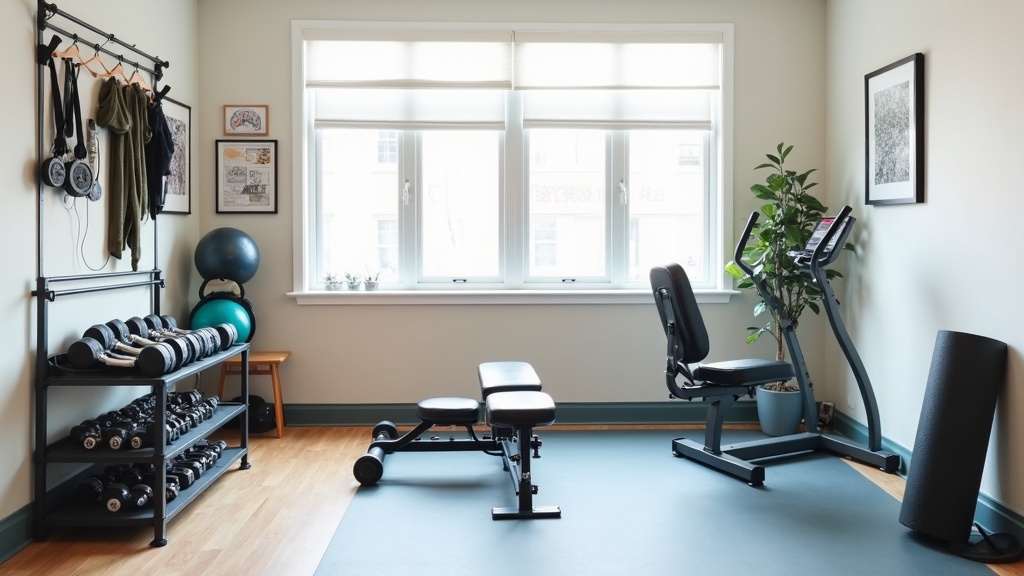
By keeping your goals clear in your mind and visualizing the person you want to become, you’ll be better equipped to overcome those moments of temptation. It also helps to create a workout space that is clean, organized, and easy to access. A comfortable environment makes it easier to stay consistent and look forward to each training session.
3. Focus on Overall Health and Strength
One of the biggest misconceptions about strength training is that it automatically turns people into bodybuilders. The reality is that building a bodybuilding physique requires a very specific approach known as hypertrophy training.
For most beginners, strength training is about much more than building muscle. It can help improve mobility, increase bone and muscle strength, support fat loss, improve posture, strengthen the core, and make everyday activities easier.
Approach your workouts with the mindset of getting stronger for life. Focus not only on building muscle, but also on improving your overall health, movement, and long-term well-being.
Creating Your Own Strength Training Routine
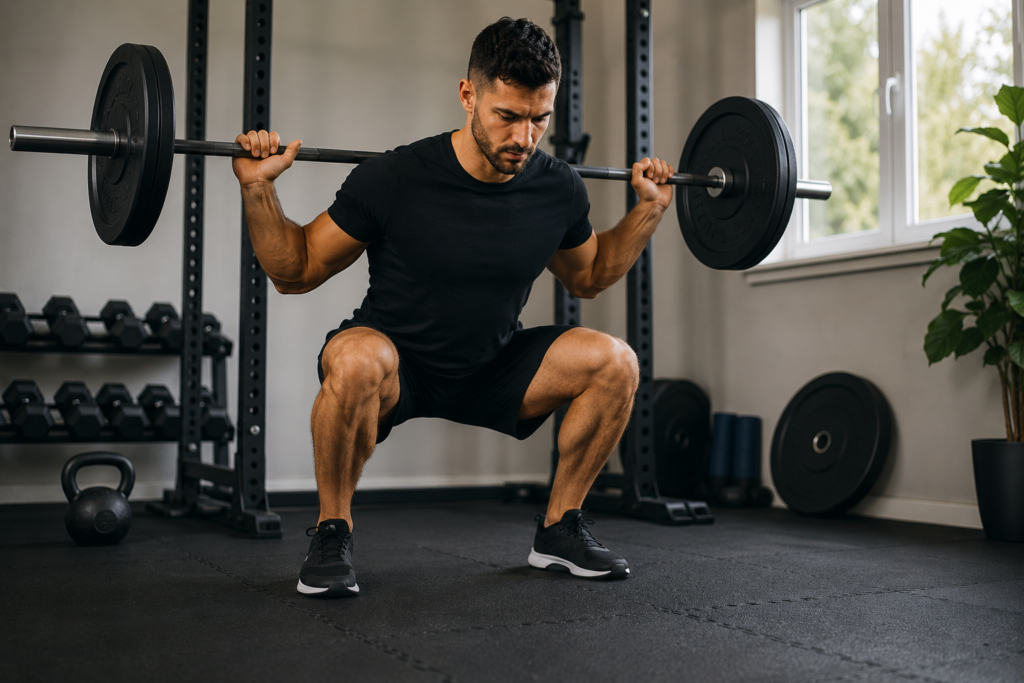
Creating your own strength training routine at home doesn’t have to be complicated. The main focus should be learning and improving the technique of each exercise. As your technique improves, you can gradually increase repetitions, resistance, or weight through a process known as progressive overload.
A simple strength training routine consists of three key parts:
-
Dynamic warm-up exercises to prepare the body for movement.
-
Strength training exercises focused on building strength and muscle.
-
Static stretching at the end of the workout to help improve flexibility and support recovery.
As a beginner, it’s important to find the right training frequency. Starting with two to three sessions per week allows your muscles and joints time to adapt to the new demands of strength training. More is not always better. Recovery is just as important as the workouts themselves.
When choosing exercises, work with the equipment you currently have available. Whether you’re using bodyweight exercises, resistance bands, dumbbells, or a basic home gym setup, focus on mastering the fundamentals first. Compound exercises such as squats, lunges, push-ups, rows, and presses are excellent choices because they train multiple muscle groups at the same time.
You don’t need a large training area to get started. A small workout space, a yoga mat, a pair of dumbbells, and a set of resistance bands are often enough to build an effective beginner strength training program.
Most importantly, focus on proper technique. Strength training is not a race. Taking the time to learn correct movement patterns will help you build strength safely, reduce the risk of injury, and create better long-term results. If needed, watch exercise tutorials or record your workouts to review your form and continue improving over time.
Maintaining Progress and Getting Stronger
Tracking your progress is one of the most important parts of strength training. Whether you use a notebook, spreadsheet, or fitness app, recording your exercises, sets, reps, and weights allows you to see your improvements over time and identify areas that need more attention.
Strength training is exactly what the name suggests — training to become stronger. The goal isn’t necessarily to chase a bodybuilding physique. The goal is to build a stronger, healthier, and more capable version of yourself. Stronger muscles, stronger joints, better mobility, improved posture, and greater confidence in everyday life.
That’s why technique should always come first.
Treat each exercise as a skill that needs to be practiced and improved. Don’t simply focus on adding more weight to the bar. Focus on mastering the movement itself. Good technique not only reduces the risk of injury but also helps you build strength more efficiently over the long term.
Once your technique improves, you can begin applying progressive overload by gradually increasing weight, repetitions, or training volume. As you gain experience, your training can become more individualized based on your strengths, weaknesses, recovery ability, and specific goals.
For most beginners, however, a simple three-day-per-week program built around compound movements is more than enough to generate excellent results. Start as a beginner & become a Powerlifting Pro.
Bench Press
The bench press is one of the most effective upper-body strength exercises. Lie flat on a bench with your feet firmly planted on the floor. Grip the bar slightly wider than shoulder width, lower it under control to your chest, then press it back up until your arms are fully extended. Focus on keeping your shoulder blades pulled back and maintaining control throughout the movement.
Squat
The squat is often considered one of the best full-body strength exercises. Stand with your feet approximately shoulder-width apart, keep your chest up, and lower your body by bending at the hips and knees. Descend until your thighs are at least parallel to the floor before driving back up through your heels. Keep your knees tracking in line with your toes throughout the movement.
Barbell Row
The barbell row is an excellent exercise for developing upper-back strength and improving posture. Hinge forward at the hips while keeping your back neutral, hold the bar with your arms extended, then pull the bar towards your lower ribcage. Lower it under control and repeat. Focus on squeezing your shoulder blades together rather than using momentum.
Remember, consistency beats perfection. Motivation comes and goes, but showing up and practicing these movements regularly is what builds both physical strength and self-confidence over time.