
Meditation has been around for thousands of years, it’s becoming popular among athletes and fitness people looking to boost their performance. Pairing meditation with physical training isn’t about replacing physical activity for sitting still and doing nothing; it’s about visualising yourself going through the process of overcoming your old habits & limiting beliefs that the overcoming process will be the becoming process. Becoming a newer version of yourself, one who has already achieved the goals you have laid out. Meditation can help you train with intentions, more focused, and develop habits in your mind. Most importantly, especially for people training in the weights area with hypertrophy goals. Understanding mind muscle connection is a great tool to help isolate every area of the muscles you are targeting. Mediation is a great tool for this.
The Real Link Between Mind And Muscle Connection.
Most people focus entirely on their bodies during a workout. Counting reps, tracking Distance, or pushing heavier weights. But there’s something powerful about bringing your attention to the mind & muscle connection. This concept involves really tuning into the feeling and focusing of the muscles. Each rep is isolated and 100% focused on the contractions and movement of each muscle group. This brings great results when someone can really master this technique.
When you start paying attention to how your muscles contracts on each movement, you will notice more control and better execution. Meditation helps you become aware of each execution, each movement & each contraction to help expand the mind together with the muscles, causing it to develop and grow. Research review from the International Journal of Yoga backs this up, showing that mindfulness techniques boost the mind muscle link and improve performance during resistance training.
Why Mental Focus Is Really Important In Training
Getting distracted during a workout happens to everyone. A wandering mind can lead to poor form & technique. Mental focus is what keeps you engaged, helps you push through tough moments, and tunes out negative self talk.
Even just a few minutes of mindful breathing or visualization before stepping into the gym have helps. Especially during early morning sessions when your brain feels foggy. Meditation can act as a warmup for your thoughts, getting you grounded and ready to tackle whatever physical challenge ahead. If you struggle with nerves before a competition or a big workout, a simple breath work practice can make a huge difference in your performance.
Pre-Workout And Post-Workout Meditation Routines
You don’t need to spend hours meditating to get benefits. You can use short, timed sessions tailored to when you’re training. Here’s how you could split it up:
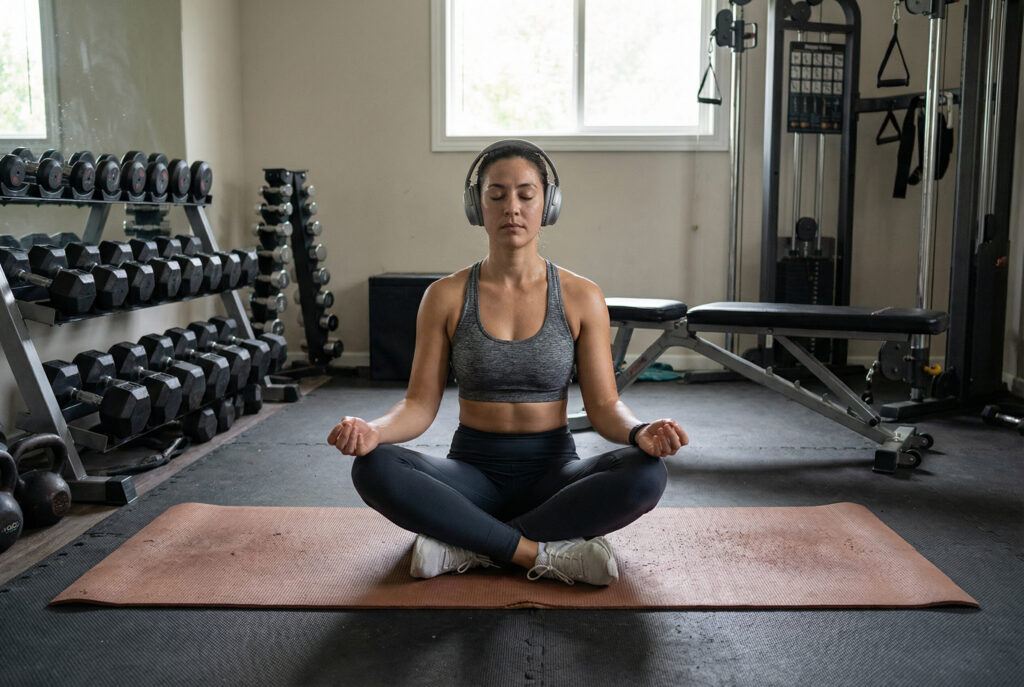
- Pre-Workout Meditation: About five minutes before a workout. This is typically eyes closed, deep breathing, and basic mindfulness where you focus on what you want to achieve that day. Not only does this get you mentally ready, but it also eases any nerves if you’re about to try something new or push a personal best. If you need a quick mental jumpstart, this focused breathing helps a lot.
- Post-Workout Meditation: After exercising, A cool down meditation helps switch off the stress response and switch to recovery mode. Do some body scanning; Usually Doing some static stretches post workout helps keeps your mind focused on the muscle you are stretching. This is why yoga techniques are so powerful. It uses the same concept.
Research from the Journal of Sports Sciences shows that meditation after intense activity reduces cortisol (a stress hormone) and supports muscle recovery. If you ever finish a workout feeling wound up, taking just a few minutes to meditate can set a calmer tone for the rest of your day.
Meditation Apps For Fitness: What’s Worth Checking Out?
There are loads of apps designed to blend mindfulness with fitness goals. I’ve tried quite a few and found some pretty handy tools. Here are a few worth adding to your phone:
- Headspace: Offers specific sport and movement focused meditations. I like the “Move Mode,” which pairs simple exercises with meditation cues.
- Calm: Features guided body scans and meditations aimed at recovery and energy draining days.
- Insight Timer: Plenty of free guided meditations, including those focused on focus, motivation, or stress relief before or after workouts.
- FitMind: Less popular but with science backed routines to help rewire habits and improve focus.
Many of these apps have short, five minute sessions, perfect if you’re tight on time or just want a quick reset between activities. Customizing your app experience can help you stay consistent, so don’t hesitate to experiment with different guides or practices.
Long Term Benefits: Longevity And Energy
Meditation delivers some pretty real benefits for your health and training. Over months, I’ve noticed I wake up feeling less drained, even after hard sessions, and have more consistent energy for both workouts and daily life. A big reason is improved sleep and reduced stress, with meditation proven to lower resting heart rates and blood pressure according to the American Heart Association.
The more I’ve meditated, the better my body seems to handle both physical and emotional stress. That means fewer burnt out days, fewer skipped sessions, and a lower chance of pushing myself too far and getting injured. Meditation also keeps me motivated, even when progress slows down. It acts as a mental reset button, letting me appreciate small wins and stay focused on big goals.
Getting Started: Simple Meditation Techniques For Athletes
If meditation seems intimidating, it helps to remember you don’t need to be some kind of Zen master to get benefits. Here are a few of some go to techniques that pair nicely with training:
- Box Breathing: Inhale for four counts, hold for four, exhale for four, hold for four. Repeat for two to five minutes. Easy to do anywhere and calms your mind prior to a good workout session.
- Body Scanning: While cooling down, slowly “scan” from head to toe and simply notice how each muscle feels after each exercise.
- Visualization: Imagine or picture yourself reaching your desired goals. Whether it’s hitting a PR in strength, Sprinting time or even your physique. What ever you conceive in your mind, if you believe it, you will achieve it.
Challenges And How To Work With Them
Building a meditation habit can get frustrating especially if you’re new to it. It is not easy to shut out the outside noise, and redirect your thoughts & become mindful. It is the most difficult thing to do, but remember there is never a bad mediation. There is only meditations of overcoming yourself each sitting. Overcoming your own habits, thoughts, behaviours and catching your unconscious thoughts in order to develop a new personality that creates a new personal reality for yourself.
- Getting Distracted: If your mind drifts, bring it back to your breath. Don’t be too fixated on your mind drifting as it is a normal part of meditation practice. Just like any practice, the more you practice the more focused and aware you get at it.
- Consistency: Even on the days you feel like you don’t have much time to meditate, simply do a quick 5 minute breathing technique. The key is to keep a daily consistent so you don’t lose momentum.
- Choosing The Right Space: Somewhere quiet is nice. Use headphones or a meditation app, preferably away from noise and outside distractions.
Mindset Switch Ups
The more comfortable you get with meditation, the more patient and positive you become. It becomes less about chasing fast results and more about enjoying progress and appreciating what your body can do each day. The mental strength you build through meditation carries over to other parts of life, making you better at handling everyday stresses.
Real World Examples: Meditation In Sports And Training
Loads of pro athletes now build meditation and mindfulness into their routines. LeBron James, Novak Djokovic, and the entire Seattle Seahawks team have talked about using it to boost performance and deal with high pressure moments. Science backs this up, with studies showing that regular meditation improves reaction times and decision making in sports.
- Yoga and Strength Training: Yoga’s roots in meditation fit really well with lifting. You may borrow mindfulness techniques from yoga to help focus and breathe better during heavy lifts like squats & deadlifts. This combo helps with flexibility and power, especially on tough days.
- Running and Endurance: Distance runners often practice “mindful running” to tune out discomfort and maintain form, especially during long training sessions. It’s a great way to keep your head in the game when progress starts to stall.
Whether you play sports or just want to move better, meditation offers mental toughness that translates to both competitions and regular gym routines. The trick is to keep showing up and giving yourself permission to adjust the practice as you go.
Frequently Asked Questions
Here are some common questions people ask when starting to use meditation with training:
Question: Can meditation really improve my physical results?
Answer: Regular meditation can make training more effective by boosting focus, raising pain tolerance, and helping your body recover faster. It may not replace solid workouts, but it helps you get more from each one. Even staying consistent for a month or two shows results you can feel.
Question: I have no time for long sessions. What’s the minimum I should do?
Answer: Just 2 to 5 minutes before or after physical training is enough to feel some benefits. Many folks notice improved focus and better recovery from even super short sessions; you can always add more time as it fits your routine.
Question: How fast will I notice results?
Answer: Small improvements like feeling calmer or more focused can show up within a week. Deeper changes, like improved energy or faster recovery, take consistent practice over several weeks. If you keep at it, you’ll keep spotting new benefits along the way.