Prefer listening instead of reading?
As a truck driver myself, I know it’s not always easy to sit down and read a full article. Every KingPowerFit Articles includes an audio version recorded in my own voice recorded while on the job, so you can listen while driving, walking, training, or relaxing at home.
Hit play below and enjoy the audio version of this article.
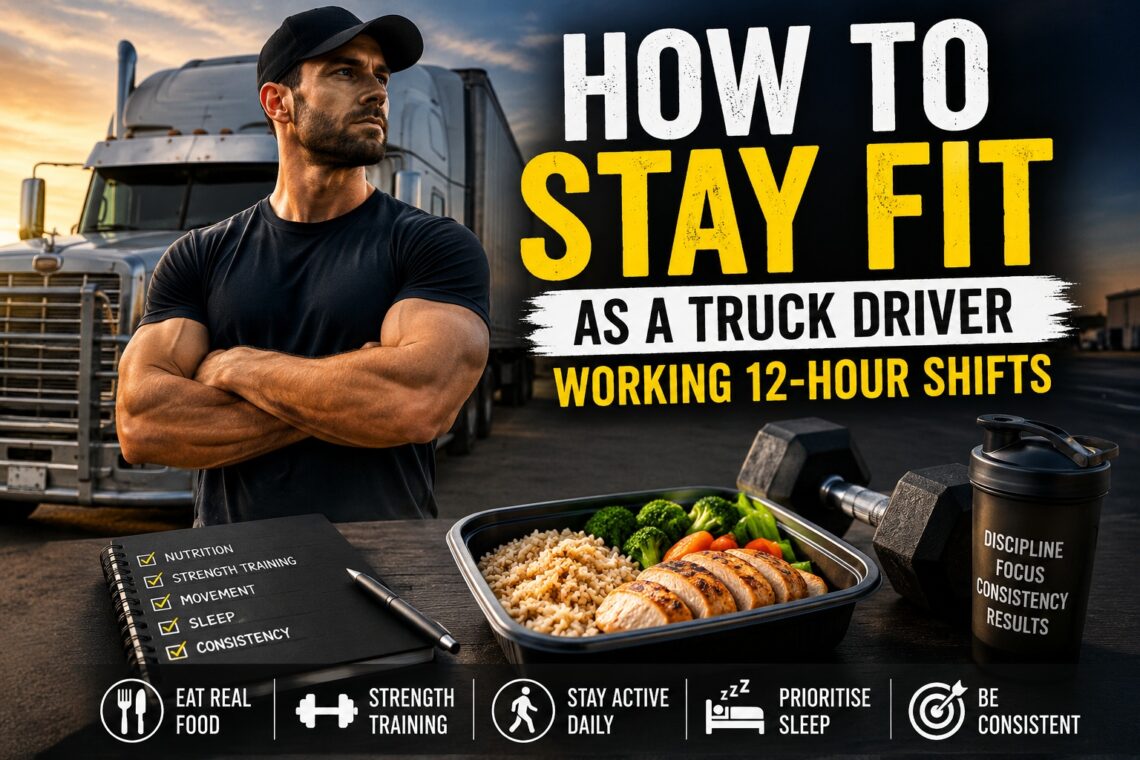
Many truck drivers struggle with weight gain, low energy, back pain, and finding time to exercise. After spending 12 hours at work, fitness often feels impossible.
Working as a truck driver comes with unique challenges when it comes to health and fitness. Long hours on the road, busy schedules, and family commitments can make it difficult to stay active and maintain healthy habits.
The good news is that staying fit while working 12-hour shifts is possible. With the right approach, small consistent actions can lead to significant results over time.
One thing that helped me stay consistent was preparing my gym gear ahead of time. If I planned to train before work, I’d get everything ready the night before. If I was training after work, I’d bring my gym gear with me. Another convenient solution is to set up a home gym within your budget.
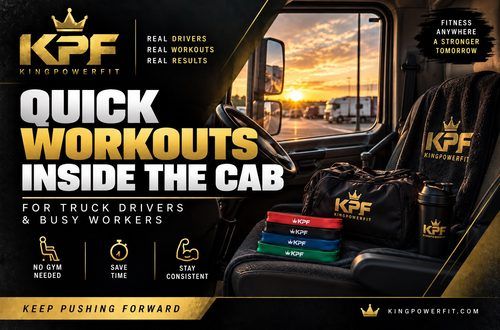
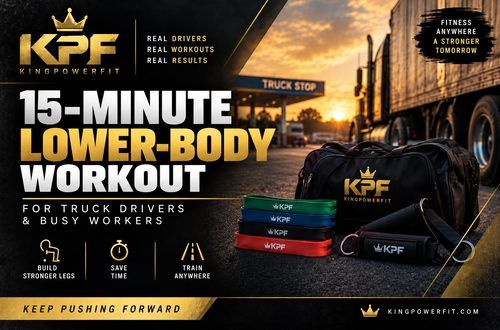
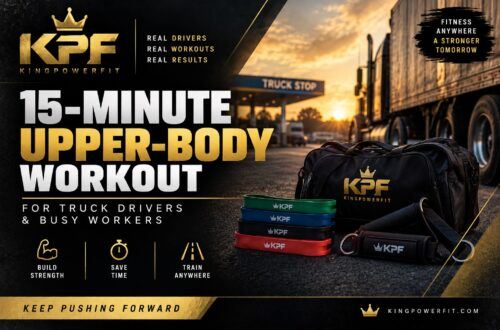
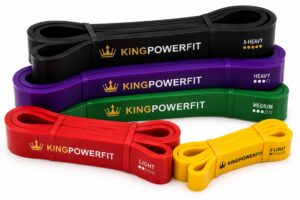
Not every workout needs to be an hour long. Short walks, bodyweight exercises, resistance band training or stretching during downtime, while on breaks & at truck stops can compound over time. I personally leave a pair of 10kg dumbbells or a set of resistance bands in my cab for a quick dumbbell circuit workout when on breaks. Even 5-10 minutes of movement 3 times per day adds up to 15-30 minutes of total workout.
Recommended App: If you’re looking for structured workouts you can follow around a busy work schedule, I personally recommend Centr. It includes workout programs, meal ideas, and training plans that can be done at home, in the gym, or while travelling.
Why Do Truck Drivers Struggle to Stay Fit?
Most truck drivers struggle to stay fit because, depending on the company and type of work, trucking is largely a sedentary job.
Many drivers spend long hours sitting behind the wheel, waiting to be unloaded, sitting in queues, or driving from one location to another. The most active part of the day is often walking around the trailer, removing straps and buckles, or carrying out vehicle checks.
Nutrition can also be a major challenge. Many drivers don’t prepare meals in advance, and after a long 10 to 14-hour shift it’s easy to grab whatever is convenient from a service station, truck stop, or takeaway shop. Unfortunately, these options are often high in calories and heavily processed.
Fatigue is another common issue. After working a 10 to 14-hour shift, most drivers just want to get home, eat dinner, and relax. Finding the motivation to exercise can be extremely difficult.
The combination of long hours, limited movement, poor food choices, and fatigue can make staying fit feel almost impossible. Over time, this can lead to weight gain, lower energy levels, reduced fitness, and an increased risk of health problems.
Prioritising Nutrition: Eating Right on the Road
There are many diets trending today, from carnivore and keto to intermittent fasting and vegan diets. The truth is that different diets work for different people depending on their lifestyle and preferences.
For me, and many of the clients I’ve trained in the past, the simplest approach is often the best: eat real whole foods and minimise ultra-processed foods.
You don’t have to cut out carbs, give up meat, or follow a strict diet. Simply focus on minimally processed foods such as fruits, vegetables, rice, potatoes, eggs, and quality protein sources. Try to prepare your meals and snacks in advance so they’re ready to go during your shift. If you fail to prepare, it’s easy to end up reaching for packet chips, chocolate bars, and sugary foods throughout the day.
If I could give one piece of nutrition advice to any truck driver, it would be this: eat more real food and more protein.
Before worrying about calorie tracking and complicated diets, focus on building that foundation first. Aim to eat a high-protein diet and get stronger through strength training. Building muscle helps support your metabolism, improve body composition, and maintain strength while reducing body fat.
A simple starting point is to aim for around 1 gram of protein per pound of your target body weight while focusing on mostly whole foods. You may use a fitness app such as myfitness pal to help track your daily intake.
Keep it simple. Eat real food, eat enough protein, and stay consistent.
Prioritizing Strength Training
If there is one form of exercise I would recommend to every truck driver, it would be strength training.
Many people focus only on losing weight, but the goal should be to build and maintain muscle while reducing body fat. Muscle helps support your metabolism, improves strength, and makes everyday tasks easier as you get older.
You don’t need to spend hours in the gym. A simple full-body workout 2-4 times per week is enough for most people. If you’re too tired to visit a commercial gym after a long 12-hour shift, consider building a simple home gym for convenience. You can also fit in short workouts throughout the day whenever time allows.
The key is to focus on proper technique, getting stronger over time, and staying consistent.
Remember, we are not just chasing a better-looking physique. We are building a stronger, healthier body that can handle the demands of long shifts and everyday life.
Stay Active Throughout the Day
While truck driving is a sedentary job, it’s important to stay active whenever possible.
If you’re waiting in a queue or waiting to be unloaded, get out of the truck, stretch, and walk around in a safe area. Small amounts of movement throughout the day can add up quickly.
You don’t need to spend an hour on a treadmill. Something as simple as a 10-minute walk after each meal can give you 30 minutes of cardio per day.
Other easy ways to increase your activity include taking the stairs instead of the lift, parking further away from your destination, and looking for opportunities to walk more throughout the day.
I also recommend using a step-tracking app and aiming for around 8,000 to 10,000 steps per day. In my opinion, that’s all the cardio most truck drivers need.
Prioritizing Sleep and Recovery
Sleep is one of the most important parts of staying fit and healthy.
As truck drivers, we often work long hours and can easily overlook the importance of recovery. When you train, you’re placing stress on your body. Your muscles don’t grow during the workout; they grow when you recover.
Most adults should aim for 7-9 hours of sleep per night whenever possible. For local drivers, try to go to bed and wake up at the same time each day to build a consistent routine.
To improve sleep quality, keep your room dark, reduce interruptions, and avoid screens before bed.
One rule I try to follow is: no food 3 hours before bed, no liquids 2 hours before bed, and no screen time 1 hour before bed. It doesn’t have to be perfect, but following these habits can make a big difference to your recovery, energy levels, and overall health.
For more detailed information, have a read of my article on sleep tips.
Conclusion
Staying fit as a truck driver working 12-hour shifts isn’t always easy, but it is possible.
You don’t need a perfect diet, hours in the gym, or an extreme fitness plan. Focus on the basics: eat mostly whole foods, prioritize protein, strength train, progressive overload, stay active throughout the day, and get quality sleep whenever possible.
Some weeks are hectic and it’s hard to know what workout to do. Following a structured program can remove the guesswork. Centr is one option I’ve used that provides workout plans and recovery tools suitable for busy schedules.
Remember, fitness is not about being perfect. It’s about making small consistent improvements over time. Start with one habit, build momentum, and keep moving forward.
If I can balance fitness while working long hours on the road, there’s a good chance you can too.