 Prefer listening instead of reading?
As a truck driver myself, I know it’s not always easy to sit down and read a full article. Every KingPowerFit Articles includes an audio version recorded in my own voice recorded while on the job, so you can listen while driving, walking, training, or relaxing at home.
Hit play above and enjoy the audio version of this article.
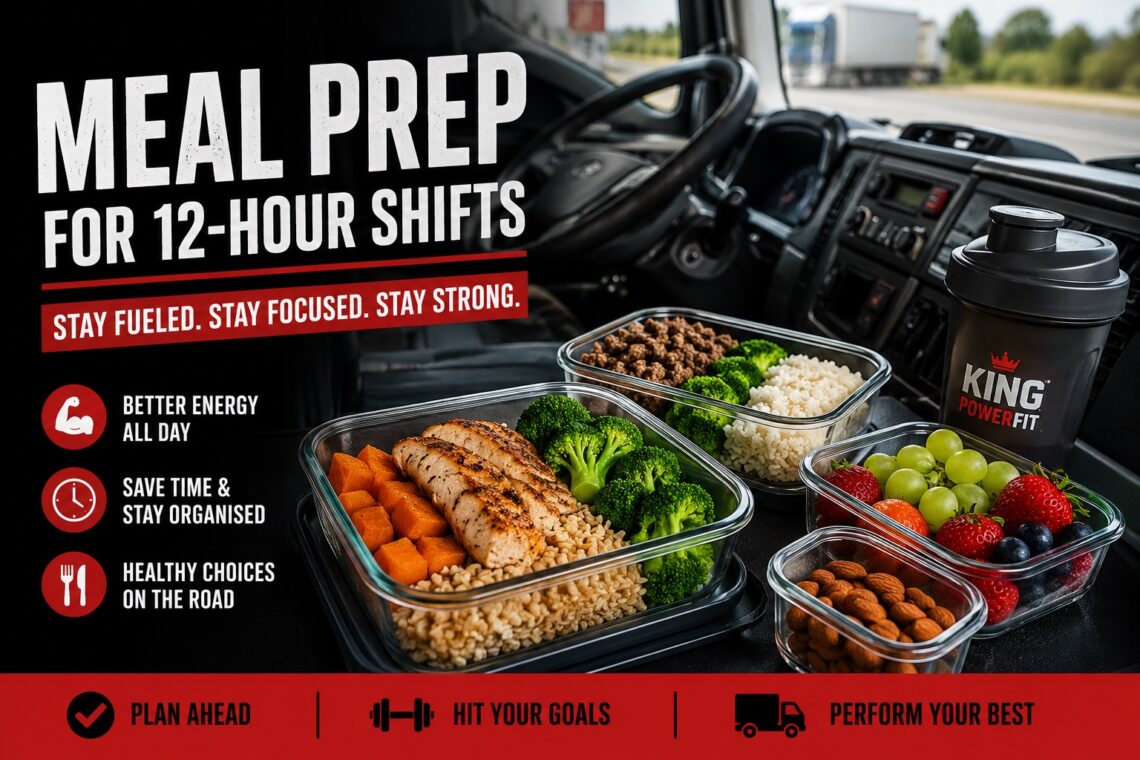
If a truck driver asked me how to meal prep for a 12-hour shift, I wouldn’t start by talking about calories, fancy recipes, or expensive meal plans.
I’d keep it simple.
This guide is for truck drivers who don’t know where to start. It’s the exact step-by-step approach I’d use if you were sitting in front of me asking for advice.
Over the years, I’ve realised that most people overcomplicate meal prep. They try to change everything at once, follow strict diets, or worry about the small details before they’ve built the basics.
Instead, I like to break the process into 6 simple phases.
Phase 1: Start With Real Foods
So, what do I mean by real foods?
To me, real foods are foods that are as close to their natural state as possible. They’re mostly single-ingredient foods that come from nature rather than being heavily processed.
Before worrying about calories, tracking your food, or following a strict diet, the first step is simply to eat mostly whole, single-ingredient foods.
Your meals don’t need to be complicated.
A simple meal could include:
-
A handful of carbohydrates such as rice, potatoes, or pasta.
-
A palm-sized serving of lean protein like chicken, lean beef, or fish.
-
Plenty of vegetables.
A simple way to estimate your portions is by using your hand. A palm-sized serving of lean protein is roughly 25–30 grams of protein for most people, making it an easy guide when you’re preparing meals without weighing everything.
That’s it.
Forget trying to cook gourmet meals. The goal isn’t perfection. The goal is to have nutritious meals ready to eat, so you’re less likely to rely on takeaway or convenience foods during a long 12-hour shift.
Phase 2: Prepare Your Meals in Advance
Personally, I prepare my meals every Sunday.
That might look different for you, though. Everyone’s work schedule, family commitments, and routine are different, so choose a day that works best for your lifestyle.
Rather than cooking every single day, I prepare enough meals to cover the first few days of the week.
When those meals run out, I’ll simply cook another batch.
This keeps meal prep manageable and stops it from feeling like a chore.
Having meals already prepared also removes the daily question of, “What am I going to eat today… and tomorrow?”
When you’re working 12-hour shifts, convenience matters.
Instead of getting to your break and thinking, “What should I buy? What’s nearby?” you’ve already made the decision.
You simply grab your meal, heat it up, and eat.
For me, that’s one of the biggest advantages of meal prepping. It makes the healthier choice the easier choice.
Phase 3: Work Out Your Daily Calories
This is the next stage of meal prep.
Now it’s time to define your goal.
Everyone’s goal is different. Some people want to build muscle, while others want to lose body fat. Once you know your goal, you can start working out how many calories you should be eating each day.
In simple terms, if your goal is to build muscle (bulk), you’ll generally need to eat in a calorie surplus, meaning you consume more calories than your body burns.
If your goal is to lose body fat (cut), you’ll generally need to eat in a calorie deficit, meaning you consume fewer calories than your body burns.
To keep things simple, I’d recommend downloading a calorie-tracking app.
For the first week, don’t change anything.
Just eat and drink as you normally would while tracking everything. This gives you a realistic picture of your current eating habits and helps estimate your maintenance calories.
Once you know roughly where you’re sitting, you can make small adjustments based on your goal.
There’s no point copying someone else’s meal plan because everyone’s body, lifestyle, and daily activity levels are different.
The next step is making sure those calories include enough protein to support your goals. We’ll cover that in the next phase.
Phase 4: Hit Your Protein Target Every Day
After calories, protein becomes the next priority.
Protein helps support muscle maintenance, recovery and growth.
I recommend choosing mostly lean protein sources such as:
- Chicken breast
- Lean beef
- Fish
- Eggs
- Greek yoghurt
- Lean mince
Rather than worrying about having the perfect meal, I’d simply focus on consistently hitting my daily protein target.
Phase 5: Track Calories and Macronutrients
Many people only track calories.
I prefer tracking both calories and macronutrients.
Calories tell you how much you’re eating.
Macronutrients tell you where those calories are coming from.
By monitoring your protein, carbohydrates, and fats alongside your total calorie intake, you’ll have a much clearer understanding of whether your nutrition is supporting your fitness goals and where adjustments may be needed.
Phase 6: Make Healthy Eating Convenient
One of the biggest lessons I’ve learnt after years of truck driving is to prioritise convenience.
If healthy food isn’t available, it’s very easy to buy whatever is nearby.
When you do that, try logging it into your calorie-tracking app. You might be surprised by how many calories, fat, or sugar are hiding in foods you thought were a good choice.
That’s why I always try to make healthy eating as convenient as possible.
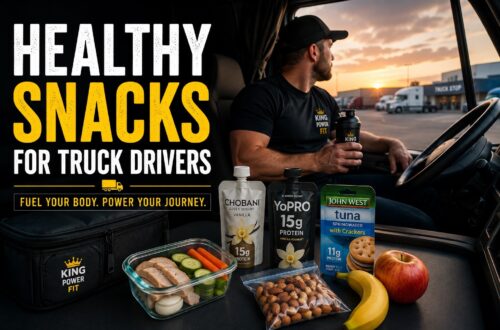
I usually carry healthy snacks like fruit, yoghurt, and boiled eggs throughout the day, so I always have something ready to eat during my breaks.
One of my favourite ways to increase my calories and protein is with a smoothie made from oats, berries, yoghurt, milk, honey, and peanut butter. It’s quick to make with a portable blender i carry, it’s easy to drink, and fits well into my routine.
Small habits like these make staying consistent much easier.
At KingPowerFit, strength training is the foundation of what I teach. Whether your goal is to lose body fat or build muscle, your body still needs the right nutrition to recover, perform, and adapt. Don’t starve yourself. As truck drivers, we spend long hours on the road, and our bodies need fuel to get through the day.
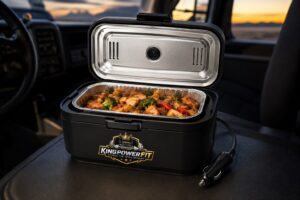
If you’re looking for an easier way to keep your meals warm during long shifts, here’s a product I recommend that can help keep your food hot and ready to eat throughout the day.
🏆 Recommended Product: I recommend a portable food warmer that plugs directly into your truck’s 12V or 24V outlet, allowing you to heat your prepared meals while you’re on the road. 👉 Check the actual product and current price on Amazon.
Disclaimer: The image shown is for illustration purposes only. Please refer to the Amazon product listing for the official product images, specifications, features and current pricing.
Final Thoughts
Meal prepping doesn’t have to be perfect.
It doesn’t need fancy recipes or complicated nutrition plans.
Start with real foods.
Prepare your meals ahead of time.
Once you’ve built that habit, then begin tracking your calories, protein and macronutrients based on your personal goals.
Trying to change everything overnight usually leads to frustration.
Instead, improve one habit at a time.
That’s how I’ve approached nutrition while working 12-hour truck driving shifts, and it’s a system that’s been much easier to stick with over the long term.
There will also be times when life gets busy and you simply don’t have the time or energy to cook.
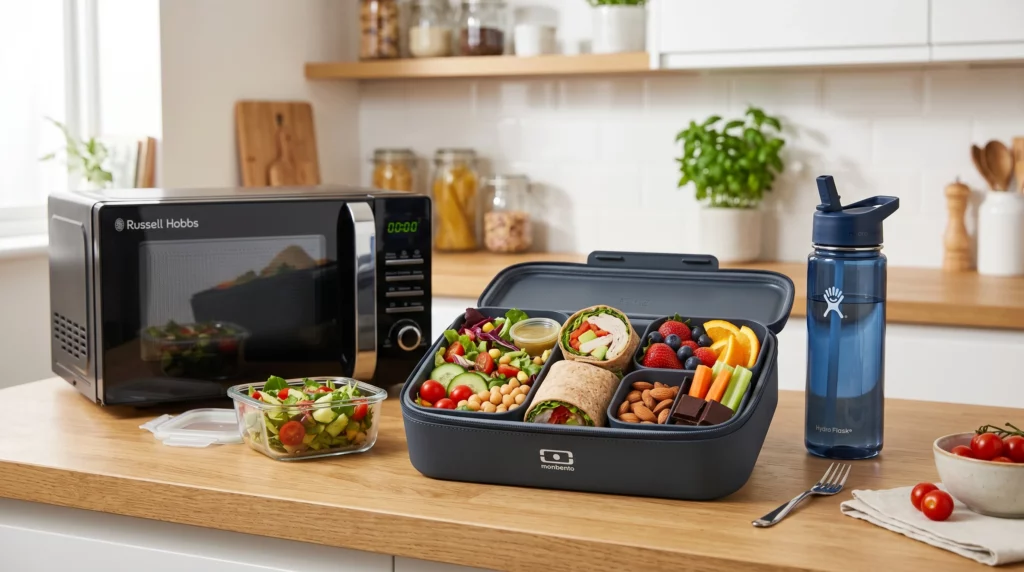
In those situations, meal prep companies can be a great option. Having ready-made meals available is still far better than relying on takeaway or service station food every day. The goal isn’t perfection—it’s finding a system that helps you stay consistent.
Related Articles
If you found this guide helpful, you may also enjoy: